
Back to Blogpillar
Clinical Excellence: The Role of Basic Life Support Training in Healthcare Settings
Ben A. 29 September 2026
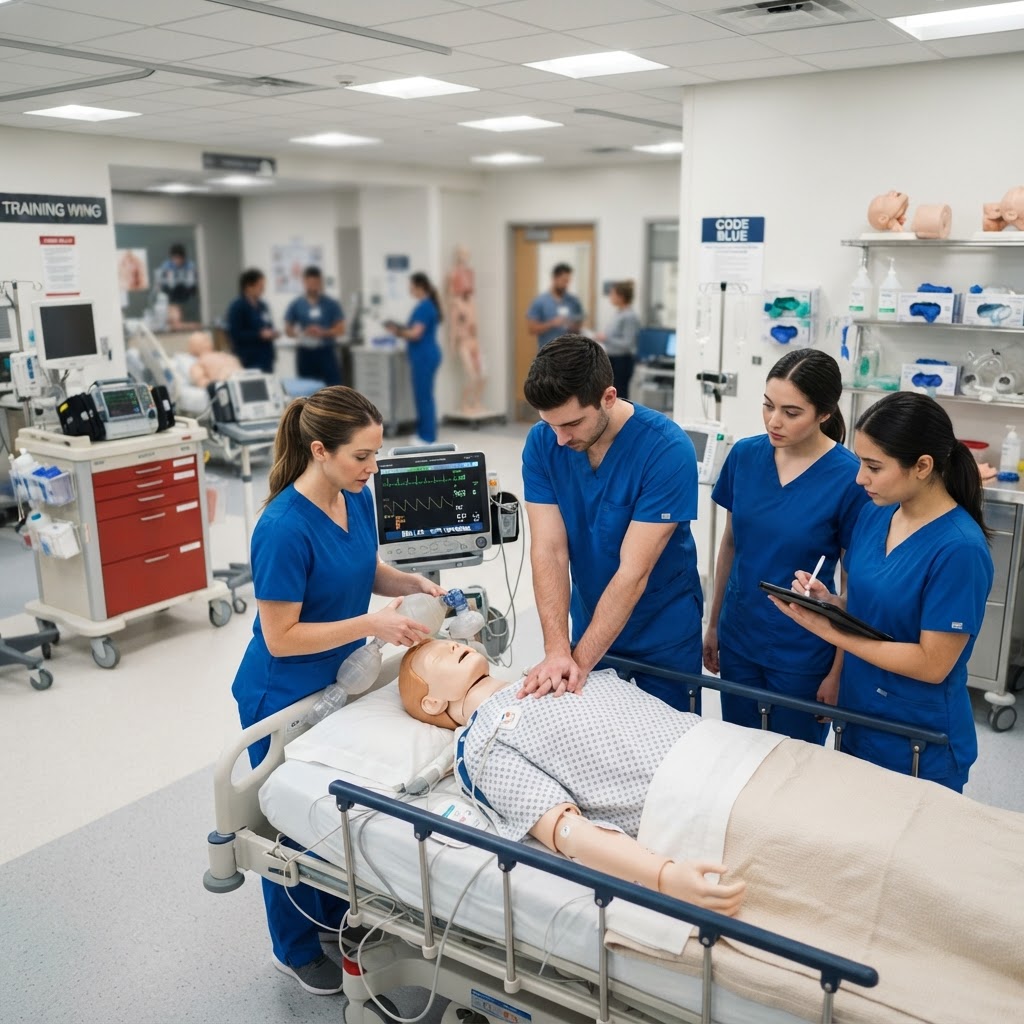
Introduction: The Foundation of Patient Safety in Healthcare. Clinical environments demand precision, preparedness, and an unwavering commitment to patient safety. While advanced interventions are vital, the bedrock of any successful resuscitation attempt remains Basic Life Support (BLS). For healthcare professionals, maintaining competency in BLS is not merely a professional requirement; it is a critical clinical skill that bridges the gap between a cardiac emergency and life-saving intervention. At Guardian Medical, we understand that BLS standards in the UK are evolving, and ensuring your team meets these requirements is paramount for regulatory compliance and excellence in care. ## Understanding the Scope of BLS in Modern Healthcare. BLS is more than just performing chest compressions. It encompasses the structured approach to recognising sudden cardiac arrest, the activation of the emergency response system, the delivery of high-quality CPR, and the effective use of an Automated External Defibrillator (AED). In a clinical setting, these skills must be reflexive. Whether you are in a GP practice, dental surgery, or a hospital ward, the standard of care expected by regulatory bodies like the CQC requires demonstrable proficiency. You can explore our Basic Life Support for Healthcare training to ensure your staff remain at the forefront of these standards. ## Compliance and Regulatory Standards: Why Skill Fade is a Risk. One of the greatest challenges for HR managers and clinical leads is managing 'skill fade'. Research consistently shows that confidence and technical proficiency in resuscitation techniques diminish significantly within six months of training. In the UK, professional bodies and statutory regulators expect healthcare providers to demonstrate continuous development. Relying on outdated training cycles leaves your organisation vulnerable to compliance failures and, more importantly, compromises patient outcomes. Regular, regulated training sessions are the only way to mitigate these risks effectively. ## Tailoring Training to Your Clinical Environment. Not all healthcare settings face the same pressures. A dental surgery may require a different focus than a general practice or a care home. Effective BLS training should be contextualised to your environment, addressing specific equipment, team roles, and patient demographics. Our Basic Life Support (Adults and Paediatrics) modules are designed to provide this flexibility, ensuring that healthcare teams are prepared for the specific contingencies they are likely to face. By simulating real-world scenarios, we help clinical leads transition from theoretical knowledge to high-performance teamwork. ## Investing in Your Team’s Confidence and Capability. When healthcare staff are confident in their BLS skills, the entire culture of the workplace shifts. Anxiety during emergencies is reduced, communication flows more clearly, and the 'chain of survival' is effectively maintained. Choosing the right training partner is about more than ticking a box; it is about building a workforce that feels empowered to act decisively. If your organisation is due for a competency assessment or refresher training, we invite you to contact us to discuss a tailored solution. ## Key Takeaways. 1. BLS is the fundamental pillar of clinical safety and must be maintained through regular, consistent training. 2. Skill fade is a reality in medical settings; training should be refreshed annually to ensure competency. 3. Compliance isn't just about documentation—it is about ensuring your staff have the practical skills to save lives. 4. Tailoring your training to your specific clinical setting improves response times and team coordination. 5. High-quality BLS training empowers staff and fosters a culture of safety that benefits both patients and practitioners.
#clinical skills#BLS#CPR#healthcare#compliance