
Safe Evacuation: Ensuring Accessibility and Compliance in Emergency Planning
Safe Evacuation: Ensuring Accessibility and Compliance in Emergency Planning
Emergency preparedness is not a 'one-size-fits-all' requirement. For UK employers, the duty of care extends to every individual within the premises, including those with temporary or permanent mobility impairments. An effective evacuation strategy must go beyond standard fire drills to address the specific needs of all staff and visitors.
The Legal Landscape: Meeting Your Equality Act Responsibilities
Under the Equality Act 2010, employers have a proactive duty to make reasonable adjustments. When it comes to emergency egress, this means ensuring that employees with disabilities are not left behind during an evacuation. Relying on the assumption that a lift will be available—or that a colleague can simply 'carry' someone—is both a health and safety violation and a significant risk to life. Proper evacuation equipment is a cornerstone of a robust compliance strategy.
Identifying High-Risk Areas and Mobility Needs
Every workplace should conduct a Personal Emergency Evacuation Plan (PEEP) assessment. A PEEP is a bespoke escape plan for individuals who may require assistance. By identifying locations where individuals with restricted mobility are primarily stationed, you can strategically place evacuation chairs and designate trained 'evacuation buddies' who understand exactly how to operate the equipment under pressure.
The Role of the Evacuation Chair
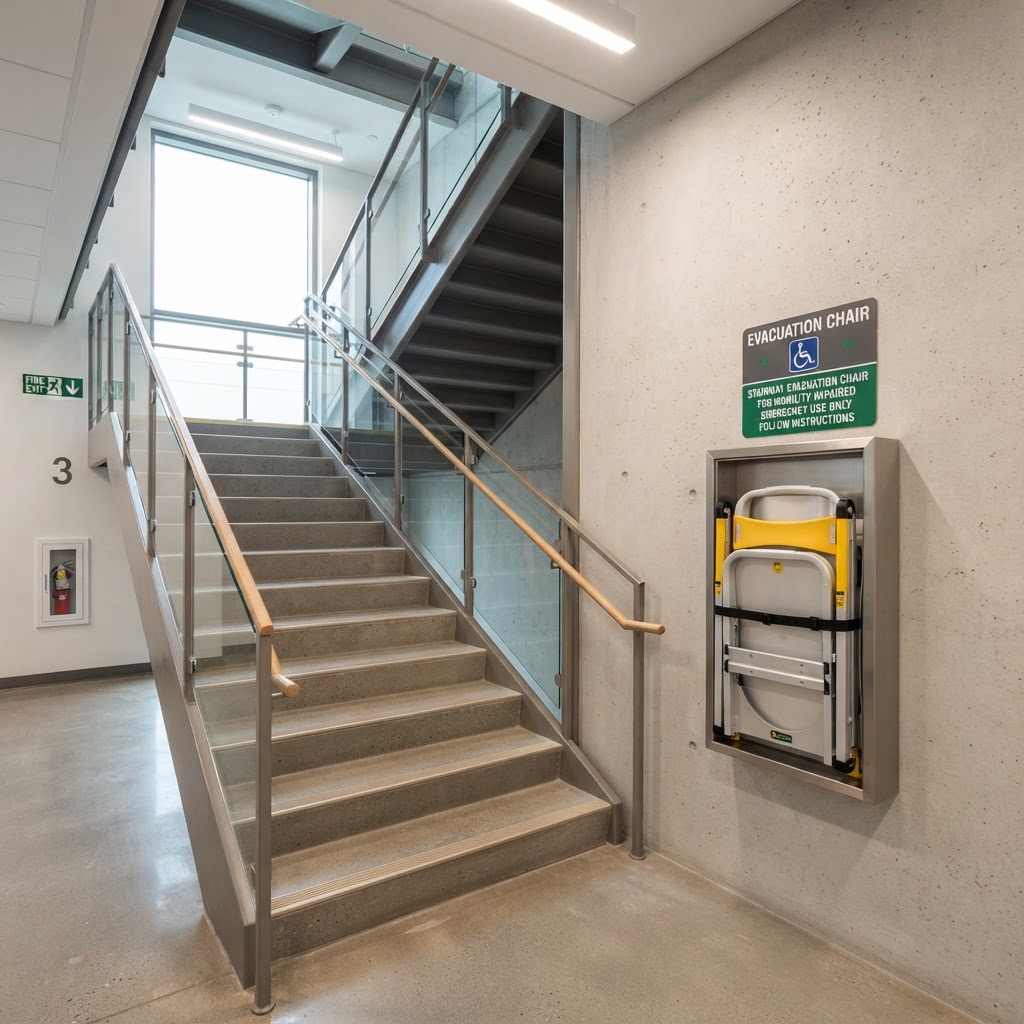
An evacuation chair is a specialised piece of safety equipment designed to safely transport individuals down stairs during an emergency. Unlike standard wheelchairs, these chairs are engineered with a belt-track system that allows for a controlled descent. Integrating these into your fire safety plan is only half the battle; ensuring they are accessible and maintained is critical.
Training for Competence: Beyond the Equipment
Having an evacuation chair in a cupboard is insufficient. Our clinical skills and safety training emphasises that operators must be competent, confident, and familiar with the specific model installed on-site. Regular, hands-on training ensures that in a high-stress scenario, your team can deploy the equipment without hesitation, protecting both the evacuee and the operator.
Building a Culture of Inclusive Safety
Inclusive safety starts with leadership. When management prioritises training and resources for accessibility, it fosters a culture of care. By incorporating evacuation training into your First Aid at Work and broader safety programmes, you ensure that every member of staff feels valued and secure in their working environment.
Key Takeaways
- Compliance under the Equality Act is non-negotiable for all UK employers.
- PEEPs (Personal Emergency Evacuation Plans) are essential for employees with mobility needs.
- Equipment must be paired with regular, hands-on operator training.
- Emergency planning should be regularly audited as part of your Health & Safety review.
- Ready to ensure your team is prepared? Contact our expert team for a consultation on your site’s specific evacuation requirements.